
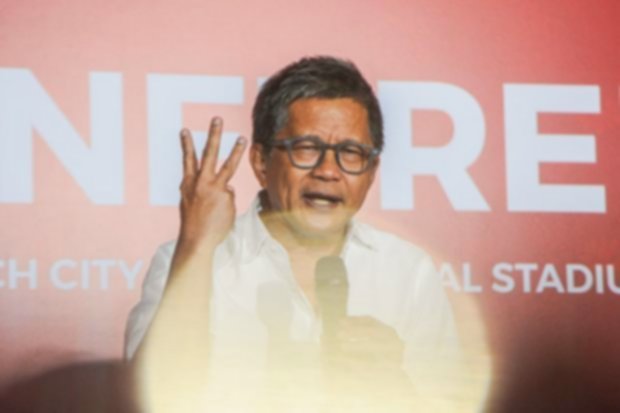

Public Prosecutor Roy Riady has challenged political analyst Rocky Gerung’s critique of the corruption trial involving former Minister of Education, Culture, Research, and Technology, Nadiem Makarim. The case, which centers on the procurement of Chromebook laptops, has been ongoing for nearly six months, and Riady argues that a comprehensive understanding of the legal proceedings cannot be achieved in a mere 60-minute observation.
Rocky Gerung attended the trial on Monday (May 11) until it was adjourned at approximately 2:00 PM WIB. His presence was intended to monitor whether the trial was being conducted based on sound legal reasoning. However, his subsequent commentary drew sharp criticism from the prosecution, who feel that brief observation is insufficient to grasp the complexity of the evidentiary process.
“How can he analyze legal facts and evidence after attending the trial for only one or two hours?” Riady questioned at the Jakarta Corruption Court. He further asserted that Rocky’s commentary fails to account for the testimony of dozens of witnesses that have been presented throughout the months-long trial, which examines allegations that Nadiem improperly pushed for Chromebook procurement between 2020 and 2022.
Prosecutors have alleged that Nadiem received IDR 809.56 billion in connection with the education digitalization program, specifically involving the procurement of Chromebooks and Chrome Device Management (CDM) systems within the Ministry from 2019 to 2022. These allegations were detailed during the indictment of three other defendants: Ibrahim Arief (also known as Ibam), Sri Wahyuningsih, and Mulyatsyah. Nadiem himself was absent from the hearing due to illness.
The financial stakes of the case are significant, with prosecutors estimating state losses at IDR 2.18 trillion. This total includes IDR 1.56 trillion related to the broader education digitalization program and approximately USD 44.05 million (equivalent to IDR 621.39 billion) attributed to the procurement of CDM software, which the prosecution describes as unnecessary and ineffective. The indictment names Nadiem and former special staffer Jurist Tan as individuals who allegedly acted in concert with the three defendants to carry out these unlawful procurement practices, which failed to comply with established planning and transparency principles.
Despite the gravity of the charges, Rocky Gerung remained skeptical of the prosecution’s strategy. He argued that the Public Prosecutor’s Office (JPU) has struggled to bridge the gap between gathered evidence and formal accusations. Specifically, he pointed to the prosecution’s attempt to use private WhatsApp conversations as incriminating evidence.
“The prosecutors seem exhausted in their efforts to convert WhatsApp chats into incriminating evidence. Their legal reasoning appears to fall short in transforming those facts into a solid legal accusation,” Rocky remarked. As the trial continues, the tension between the prosecution’s case and outside scrutiny remains a focal point, highlighting the ongoing debate over the legitimacy of the evidence presented against the former minister.
Summary
Public Prosecutor Roy Riady has criticized political analyst Rocky Gerung for his assessment of the corruption trial involving former Minister Nadiem Makarim. Riady argues that Gerung’s brief attendance at a single hearing is insufficient to understand the complexities of a case involving months of testimony and evidence regarding the procurement of Chromebooks and software systems. The prosecution contends that Gerung’s commentary overlooks the extensive evidentiary record presented throughout the ongoing trial.
The corruption case alleges that Nadiem Makarim was involved in improper procurement practices, leading to estimated state losses of IDR 2.18 trillion. While prosecutors have detailed these allegations through the indictments of three other defendants, Gerung remains skeptical of the legal strategy, specifically questioning the reliance on private WhatsApp conversations as primary evidence. As the trial progresses, the tension between the prosecution’s case and external scrutiny continues to highlight significant disputes regarding the legitimacy of the evidence.