
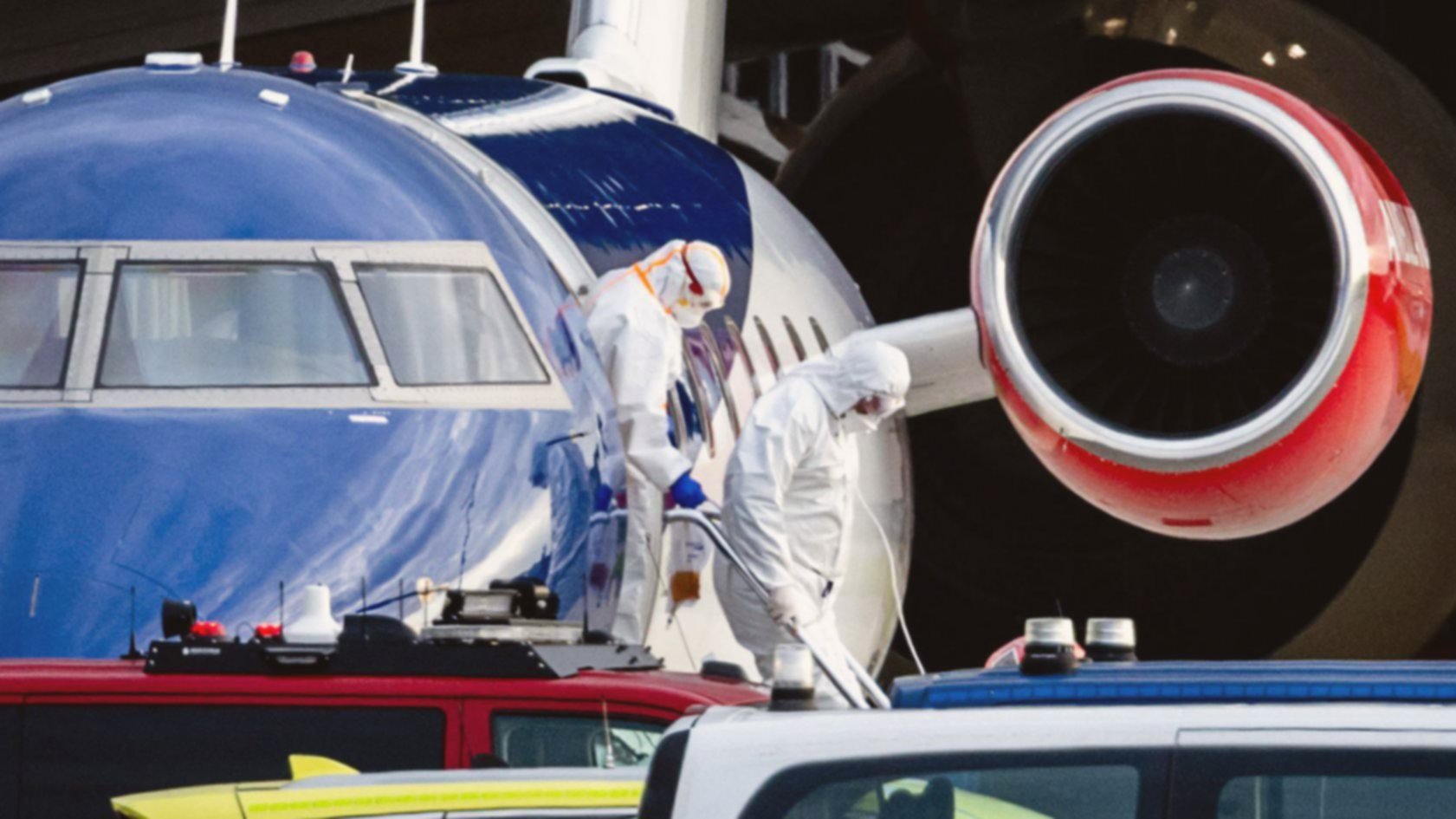
Countries across the globe are racing against the clock to track dozens of passengers who disembarked from the cruise ship MV Hondius before a hantavirus outbreak was detected, as well as anyone who may have had close contact with them since.
The World Health Organization (WHO) has confirmed six cases of hantavirus following the outbreak on board, with one fatality. Two other deaths remain under investigation to determine if they were also caused by the virus. While the WHO has clarified that this outbreak does not signal the start of a pandemic similar to COVID-19—as the Andes strain of hantavirus is primarily transmitted through “close and intimate contact”—health officials are bracing for more potential cases given the disease’s incubation period of up to six weeks.
Oceanwide Expeditions, the operator of the luxury cruise ship, reported that the vessel carried 178 passengers and crew members from 28 different nations. The journey began on April 1 in Ushuaia, Argentina, and was scheduled to conclude in the Canary Islands, Spain, on May 10. A group of 32 guests had already disembarked on the island of Saint Helena on April 24.
While hantavirus is typically spread through contact with rodents—often by inhaling air contaminated with particles from their urine, droppings, or saliva—human-to-human transmission is rare. However, the WHO confirmed on May 7 that this specific Andes strain is responsible for the infection, marking the first time such transmission has been documented on a cruise ship.
Currently, the WHO is coordinating with authorities in at least 12 countries to monitor individuals who were aboard or have since returned to their home nations, including Canada, Denmark, Germany, the Netherlands, New Zealand, Saint Kitts and Nevis, Singapore, Sweden, Switzerland, Turkey, the United Kingdom, and the United States. Although some experts have described the international response as “chaotic and uncoordinated,” the general risk to the public remains low.
Impacted Nations and Current Status
United Kingdom
Three UK citizens are suspected to be infected. Seven British nationals disembarked in Saint Helena on April 24, four of whom remained on the ship. Another patient, a crew member, was identified in Tristan da Cunha, where the ship stopped on April 13. Two other British men have confirmed cases; one, a 56-year-old retired police officer, is in stable condition in the Netherlands after an evacuation, while another is currently in an intensive care unit in South Africa. Two additional UK citizens are voluntarily self-isolating at home despite showing no symptoms.
United States
Health agencies across five states are monitoring individuals who were on the vessel: two each in Georgia and Texas, one each in Arizona and Virginia, and an unknown number in California. The U.S. Centers for Disease Control and Prevention (CDC) has classified the situation as a “level 3” emergency response, the lowest tier. None of the 17 U.S. passengers on board are showing symptoms.
Argentina
Authorities are investigating the origins of the outbreak. Reports indicate that a Dutch couple spent time birdwatching in Argentina, Chile, and Uruguay before boarding on April 1, visiting areas where the rodent species known to carry the Andes strain reside.
Cape Verde
The MV Hondius was denied permission to dock in Cape Verde and remained offshore for several days before heading toward the Canary Islands.
France
The French Ministry of Health has identified eight citizens who came into contact with a Dutch passenger—who later died from the virus—during a flight from Saint Helena to Johannesburg. One individual is currently exhibiting mild symptoms, with test results pending.
Germany
A German passenger was among the confirmed fatalities. According to the WHO, the victim initially developed a fever on April 28, which later progressed to pneumonia. Five other German guests and one crew member remain on the ship.
The Netherlands
Thirteen people on the ship were Dutch nationals. Tragically, a married couple among them passed away, with the wife testing positive for the virus. Another Dutch woman was initially hospitalized in Amsterdam due to suspected symptoms, though a WHO official later confirmed her test results were negative.
Philippines
Thirty-eight crew members are from the Philippines. No cases have been recorded among them, and officials maintain that the risk remains very low.
Spain
The arrival of the MV Hondius in Tenerife has sparked tension. While the Spanish government approved the docking, local officials in the Canary Islands have expressed strong opposition, citing a lack of sufficient information. Upon arrival, non-Spanish nationals are expected to be repatriated, while the 13 Spanish passengers and one crew member will be quarantined in a military hospital in Madrid. Separately, one suspected case has been reported in Alicante involving a passenger who was on the same flight as the victim who died in Johannesburg.
Switzerland
One Swiss man who disembarked in Saint Helena has tested positive for the Andes strain and is currently receiving treatment in Zurich.
Additional Nations
The ship’s manifest included individuals from various other countries, including Australia, Belgium, Canada, Greece, Ireland, Italy, Japan, New Zealand, Turkey, Ukraine, Russia, Portugal, Poland, Montenegro, India, and Guatemala. As the situation evolves, international health authorities continue to monitor these passengers closely.
Summary
Global health authorities are working to track passengers from the MV Hondius following a rare outbreak of the Andes strain of hantavirus, which has resulted in at least one confirmed fatality. While the World Health Organization notes that human-to-human transmission is uncommon, this cruise ship incident marks the first documented case of such spread in a maritime setting. Officials in 12 countries are actively monitoring individuals who were on board or exposed to passengers to contain the virus during its six-week incubation period.
Although the international response has faced criticism for being uncoordinated, the overall public health risk remains low, and the outbreak is not considered a pandemic threat. Impacted nations, including the United States, United Kingdom, and Germany, are managing localized cases and implementing quarantine protocols for returning travelers. Investigations into the origin of the outbreak are ongoing, with focus directed toward potential exposure to rodent-carrying regions in South America prior to the ship’s departure.