
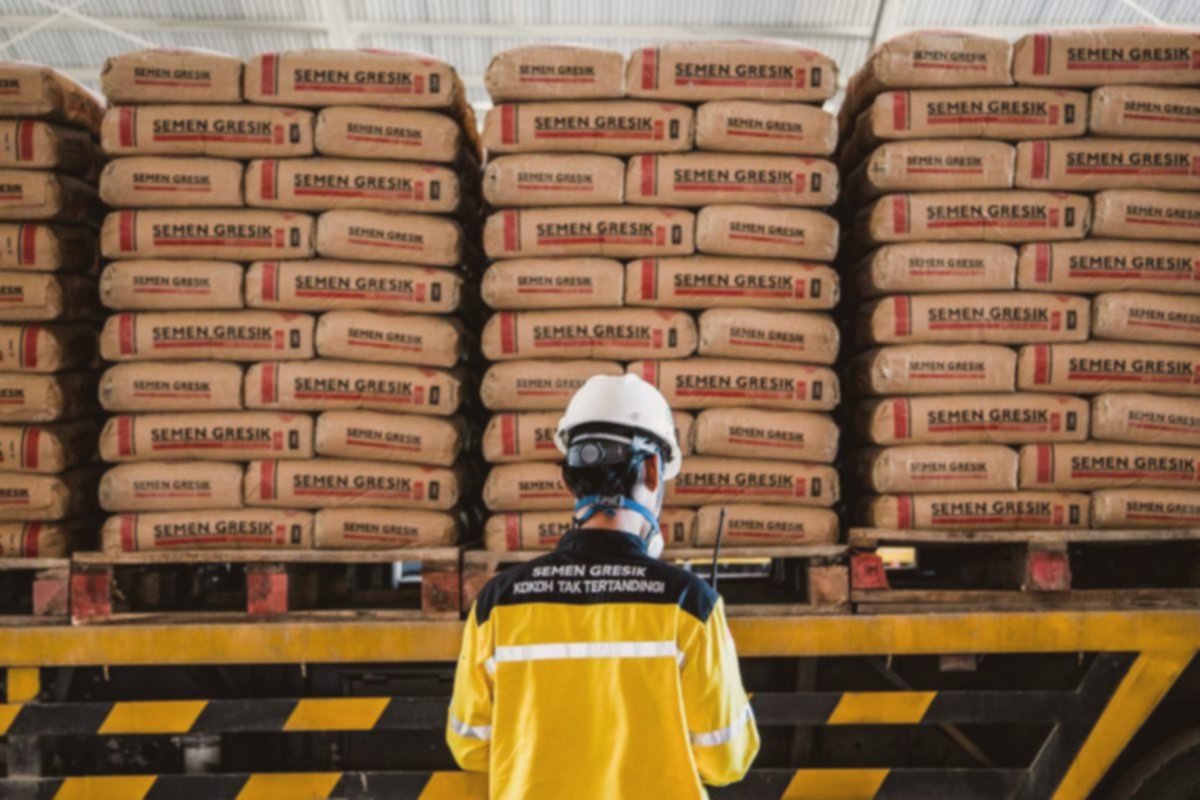
PT Semen Indonesia Tbk (SMGR) stands as a pivotal strategic enterprise, wielding immense influence over Indonesia’s building materials industry. The company is a diversified producer of essential construction components, ranging from cement, ready-mix concrete, and mortar to comprehensive construction solutions utilized across various national development sectors. Since its establishment in 1957, SMGR has continuously evolved, navigating numerous critical phases that have profoundly shaped the modern cement industry landscape in Indonesia.
Years of strategic business expansion have culminated in SMGR’s formidable production and distribution network, spanning diverse regions across the archipelago. Given the sheer scale of its operations, public interest often centers on the question of SMGR’s shareholders and its current ownership structure. A clear understanding of this shareholding is crucial for both investors monitoring the market and the general public following the trajectory of key State-Owned Enterprises (BUMN).
1. The Journey of PT Semen Indonesia: From Inception to a Dominant Holding Company

PT Semen Indonesia’s remarkable journey commenced in 1957, boasting an initial production capacity of 250,000 tons per year—a figure that, at the time, represented one of the largest capacities in Indonesia. Its timely emergence addressed the burgeoning needs of national development in the post-independence era. The government strategically positioned the company as a key producer, vital for ensuring the supply of essential building materials. This foundational role was instrumental in forging the modern building materials industry in Indonesia.
By 1995, SMGR embarked on an aggressive expansion strategy through the acquisition of subsidiaries to fortify its production and distribution network. Semen Padang and Semen Tonasa were the first two entities to be acquired, immediately contributing significantly to the national capacity. This astute strategy not only cemented SMGR’s competitive standing against other cement producers but also served as a crucial step in maintaining the stability of building material supplies nationwide.
A monumental transformation occurred in 2013 when the government officially restructured Semen Indonesia into a strategic holding company. This pivotal move consolidated various state-owned cement producers, which had previously operated independently, under a unified management umbrella. The formation of this holding company not only brought together major brands such as Semen Gresik, Semen Padang, and Semen Tonasa but also propelled the company’s expansion beyond national borders. The acquisition of Thang Long Cement Company in Vietnam stands as a testament to SMGR’s serious commitment to broadening its business reach into regional markets.
2. SMGR’s Dominant Business and Products in the National Market

As Indonesia’s foremost building materials company, SMGR offers an impressive portfolio of eight product lines, meticulously designed to cater to the diverse requirements of the construction industry. From bagged cement and bulk cement to ready-mix concrete, mortar, precast elements, and various non-cement materials, its offerings are engineered to support the entire construction process. This extensive product range positions SMGR as a provider not just of basic materials, but of comprehensive construction solutions, giving it a powerful competitive edge over rivals.
SMGR’s robust production network is strategically spread across numerous regions of Indonesia, ensuring seamless distribution. Currently, the company operates an extensive infrastructure comprising 26 packaging facilities, six cement grinding plants, and seven supporting ports for distribution. This comprehensive infrastructure significantly enhances the efficiency of product delivery, enabling the company to reach a vast market scale. SMGR continues to make substantial investments to bolster its production capacity, meeting both domestic and international market demands.
SMGR commands a highly dominant market share in Indonesia, particularly within the bagged cement category, where it controls approximately 50 percent of the national market, solidifying its position as the largest player in the country. Furthermore, SMGR products have successfully penetrated international markets, trading in Vietnam under the Thang Long Cement brand. This stellar performance underscores SMGR’s formidable capability to compete not only domestically but also across the broader Asian regional landscape.
3. Who Owns SMGR Shares? Unpacking the Ownership Structure

The question of who owns SMGR shares is a critical point of interest for investors and the public closely observing this strategic State-Owned Enterprise. Based on the share registration report as of October 31, 2025, the primary controlling shareholder of SMGR is the Indonesian government, acting through PT Danantara Asset Management. This entity holds a substantial 3.45 billion shares, representing approximately 51.23 percent of the total outstanding shares. With this significant stake, the state maintains ultimate control over the company’s strategic policies and direction.
Beyond state ownership, the composition of SMGR’s shareholding also includes a diverse mix of foreign institutions and local institutional investors. Foreign institutions collectively hold around 2.01 billion shares, accounting for 29.82 percent of all recorded shares. Meanwhile, local institutional investors command 11.08 percent, or approximately 748 million shares. This diversified ownership structure highlights SMGR’s enduring appeal to both global and domestic investors, recognizing it as a major enterprise with inherent stability.
As SMGR operates as a State-Owned Enterprise (BUMN), the ultimate beneficiary of its majority shareholding remains the Indonesian government. The government’s role as the controlling entity provides SMGR with a strategic direction that transcends purely commercial profit motives, aligning instead with broader national development interests. This unique characteristic distinguishes SMGR from typical publicly traded companies. Moreover, the stability afforded by this ownership structure instills greater confidence among long-term investors.
This comprehensive overview delves into the history, business operations, and the latest report on SMGR’s share ownership. With majority control by the government and an extensive business network, SMGR consistently remains one of the cornerstone companies in national development. Understanding its ownership structure offers investors invaluable insight into the company’s strategic trajectory and its potential for future growth.
Summary
PT Semen Indonesia Tbk (SMGR) is a pivotal strategic enterprise and a diversified producer of building materials in Indonesia, established in 1957. The company evolved into a dominant holding company in 2013, consolidating state-owned cement producers and expanding its reach, including internationally with Thang Long Cement in Vietnam. SMGR provides a wide range of construction solutions and commands approximately 50% of Indonesia’s bagged cement market, supported by an extensive production and distribution network.
As of October 31, 2025, the primary controlling shareholder of SMGR is the Indonesian government, holding 51.23% of total outstanding shares through PT Danantara Asset Management. This significant stake grants the state ultimate control over the company’s strategic policies, aligning them with broader national development interests. Other notable shareholders include foreign institutions (29.82%) and local institutional investors (11.08%).