
Despite the illegal status of hallucinogenic psychedelic drugs in South Africa, numerous healers in Cape Town openly advertise their use in therapeutic sessions. This practice carries severe legal ramifications, as anyone proven to use these substances for commercial purposes faces fines, imprisonment for up to 25 years, or both.
Among those seeking such treatment is photographer Stuart Dods, who recently underwent his second psychedelic session. Tucked away in an elegant wooden cabin amidst a forest on the outskirts of the South African capital, he sought relief from a series of debilitating mental health issues. Having previously explored legally prescribed medications without success, Stuart firmly believes that psychedelic therapy holds the key to his recovery.
“My mother died suddenly, and a year later, my relationship ended. Everything just fell apart,” recounted the 53-year-old. For approximately US$2,000 (equivalent to Rp33.2 million), Stuart opted for a treatment plan involving doses of psilocybin, commonly known as magic mushrooms, and MDMA, popular as ecstasy. This fee also covered accommodation and a comprehensive support package, highlighting the burgeoning yet unregulated market for psychedelic treatments.
While a growing body of research and clinical trials points to the potential efficacy of psychedelic drugs in treating mental health conditions, significant warnings remain regarding their use outside of supervised clinical settings. The burgeoning interest in these alternative therapies is palpable, driven by a global mental health crisis and the hope that psychedelics could offer new solutions.
The Ritual of the Magic Mushroom Healing
Megan Hardy, who refers to herself as a “healing woman” and facilitated Stuart’s session, also consumes a smaller dose of both chosen psychedelic substances before the “healing ritual.” She claims this helps her “shift to the same frequency” as her patients. “In shamanic terms, it’s ‘feet in two worlds,’ meaning being connected to two opposing sides,” Megan explained. She acknowledges the illegality of these substances but asserts her use constitutes “civilised civil disobedience.” When questioned about dosage determination, Megan claimed years of self-experimentation have guided her understanding of their appropriate application.
Heightened awareness of mental health issues, coupled with an increase in clinical trials involving psychedelic compounds, has fueled significant public interest. A growing number of individuals are now hoping that psychedelics can effectively treat conditions like depression, anxiety, and Post-Traumatic Stress Disorder (PTSD). Studies from Harvard Medical School and the University of Queensland suggest that one in two people worldwide may experience a mental health disorder in their lifetime, underscoring the trillion-rupiah business of mental health treatment.
Before the psychedelic ritual commenced, which Stuart had agreed to have filmed by BBC World Service, Megan reassured her client that he could halt the process at any point. “If anything feels uncomfortable or the process triggers a reaction, just say so and tell me: ‘OK, stop.'” Megan’s colleague, Kate Ferguson, who also consumed small doses of MDMA and magic mushrooms, was present. Neither guide possesses formal medical training, a critical point for critics of the unregulated sector.
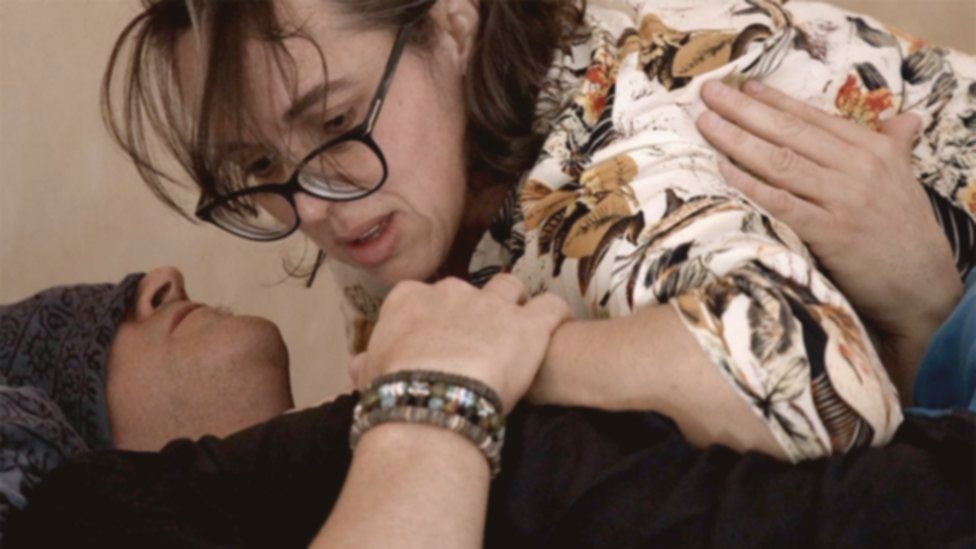
Stuart then lay on a thin mattress on the cabin floor, covered by a grey blanket, wearing a blindfold. As the drugs began to take effect, he cycled between moments of calm and periods of convulsion. “Allow yourself to feel it,” Megan whispered, embracing Stuart. The two women moved around the room, burning herbal concoctions, creating sounds, and singing. They also performed prayers in a cleansing ritual known as “smudging,” with Megan fanning Stuart’s body with bird wings to clear what she described as “negative energy.”
Megan then offered her patient more MDMA. Stuart had agreed to this potential additional dose before the ritual. However, when Megan asked if he needed it, Stuart simply shrugged and replied, “I don’t know.” The BBC later questioned Stuart about how he could consent to taking more drugs while in an altered state of consciousness. “There was no coercion. It was more just me figuring out in that space, do I want to take this? I had the opportunity to say: ‘Yes,’ ‘no,’ or ‘yes, I will take it’,” Stuart maintained.
However, many in the professional psychiatric community highlight the inherent dangers of this unregulated industry. “To give consent, you must be in a conscious state,” asserted Marcelle Stastny, Chair of the South African Society of Psychiatrists. “If someone has already taken psilocybin and MDMA, they are not in a conscious state. They are intoxicated, they are high. And in many clinical trials worldwide, this is a real boundary violation.”
How Research Explores Psychedelic Use for Mental Healing
The BBC asked Megan whether her ability to care for clients might be impaired by the influence of drugs while leading a psychedelic ritual. She claimed this was not an issue, stating that during every ritual, she is convinced her mind is in a fully conscious state. “We’re working in ways that the Western mind doesn’t understand and can seem scary,” Megan admitted, highlighting the clash between traditional and scientific approaches.
Indeed, a growing body of research is investigating whether psychedelic drugs could be viable alternative treatments for conditions such as depression, anxiety, or substance abuse. In 2022, one study on the therapeutic use of psychedelics involved administering a synthetic formulation of psilocybin to 233 participants. This study found that a 25-milligram dose, administered alongside psychological support from trained therapists, led to reported improvements in patients’ depressive conditions.
However, a review study published in 2025 by the European Medicines Agency, which examined a total of 595 participants from eight completed studies, recommended “further clinical evidence” before allowing the sale of such substances. The study also warned that consuming psychedelic substances can increase heart rate, blood pressure, and anxiety levels, with researchers emphasizing the necessity of controlled administration. While psychedelic substances remain illegal in most countries, this has not curbed the growth of their industry in South Africa, marked by an increasing number of online advertised services.
“I think this is a big problem. It’s really exploding in Cape Town, especially. Everyone is looking for a pill to solve all problems, and there isn’t actually a pill that can solve all problems,” stated Marcelle Stastny, Chair of the South African Society of Psychiatrists.
Patient Fatalities and Legal Cases
Several years ago, Sonette Hill, a self-appointed psychedelic guide from Cape Town, administered Ibogaine to a patient. Ibogaine is a potent psychedelic extracted from plants endemic to the rainforests of Central and West-Central Africa. The experience triggered an unexpected and violent reaction. “He choked my neck. He wanted to kill me. Something took him over, and he just wanted to kill me,” Sonette recounted. Ibogaine can be used as a powerful detoxifying agent for individuals suffering from addiction. It is illegal to purchase or use in South Africa and is only permitted under strict medical and pharmaceutical regulations. No criminal charges were brought against Sonette. She has since refrained from administering psychedelic drugs to others, though this has not altered her strong conviction regarding the industry. “I, honest to God, believe that psychedelic drugs can heal the world. I don’t believe in the medical world,” she declared, expressing a profound distrust of conventional medicine.
In another tragic instance, 26-year-old Milo Martinovic traveled to South Africa seeking help for his substance addiction. He ended up at an unregistered facility, treated by a dentist, and was given Ibogaine. Six hours later, he died. The unregistered clinic was unaware that he was addicted to Xanax, a benzodiazepine that should never be combined with Ibogaine. In 2024, dentist Anwar Jeewa was found guilty of several charges, including culpable homicide. Martinovic’s death is one of dozens of fatalities recorded worldwide in connection with Ibogaine, underscoring the lethal risks of unsupervised psychedelic use.
“You can’t call something medicine if it’s not medicine,” Stastny underscored. “I have seen new patients who have experienced prolonged dissociation after using psilocybin.” The evidence for psychedelics as medicine may still be nascent, but the online market for self-proclaimed healers offering curated “journeys” involving various illegal substances is rapidly expanding. “They just know that they have had a spiritual journey, felt great, and want to help others,” Stastny remarked. “On the other hand, there is a kind of narcissistic symptom when they say: ‘I can help people, I can do it better than a psychiatrist.'”
Back in the forest cabin in Cape Town, the effects of Stuart Dods’ “journey” began to fade. He stated he did not feel ‘cured,’ but he was convinced he was on a path toward healing. “I want to gain greater self-awareness and understand myself,” he said. “I can feel that this is opening something, and I will probably do another trip after this,” demonstrating a continued belief in the practice despite its controversies.
- Why was the fake shaman able to imprison a girl for 15 years?
- Hundreds of women deceived into faking pregnancies, a shaman arrested
- Police reveal identity of suspected perpetrators in West Jakarta mother-child murder – Five facts from motive to disguise as a shaman
- BBC investigation uncovers predatory shamanic practices disguised as religion
- The 1998-1999 ‘witch doctor’ massacre in Banyuwangi: ‘There was a cross, the lights suddenly went out, and my father was then killed’
- Money-doubling shaman Tohari alias Mbah Slamet killed 12 victims, how can similar cases be prevented?
Summary
In South Africa, despite the illegal status of hallucinogenic psychedelics, numerous healers openly advertise their use in therapeutic sessions, carrying severe legal ramifications. Individuals like Stuart Dods seek these unregulated treatments for mental health issues, driven by hope after conventional methods failed, undergoing sessions with guides like Megan Hardy who also consume the substances and lack formal medical training. This burgeoning market for psychedelic treatments is fueled by a global mental health crisis and growing interest in alternative therapies.
However, the professional psychiatric community strongly warns against these unregulated practices, emphasizing the impossibility of informed consent while intoxicated and highlighting inherent dangers. Tragic fatalities, such as Milo Martinovic’s death from unsupervised Ibogaine use at an unregistered facility, underscore these lethal risks. While research explores psychedelics’ potential for mental healing, critical warnings persist regarding their use outside supervised clinical settings, yet the online market for these services continues to expand.