
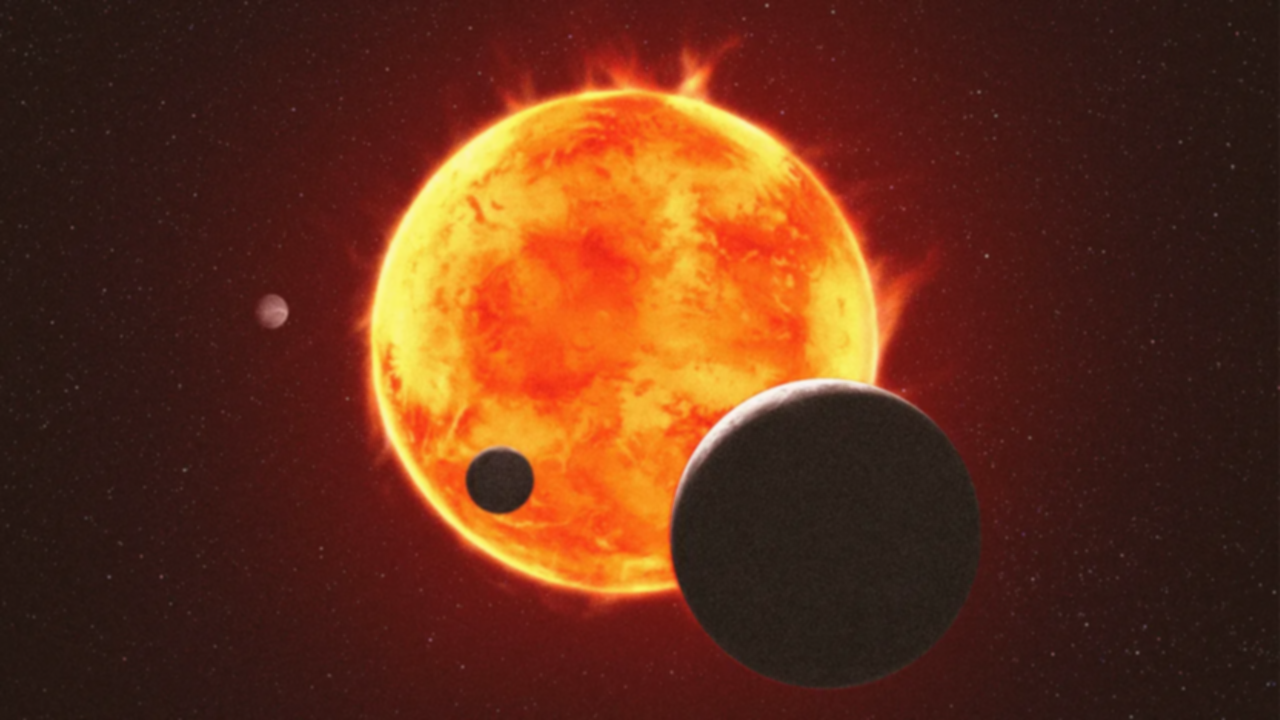

The relentless quest to discover an ‘Earth twin’ capable of supporting life continues to captivate astronomers worldwide. Planet hunters specializing in exoplanets, Christopher Watson and Annelies Mortier, shed light on this profound endeavor.
A pivotal moment in astronomy occurred on October 6, 1995, when two Swiss astronomers unveiled a discovery at a scientific gathering in Florence, Italy, that would fundamentally alter our understanding of the universe beyond our Solar System. These pioneers were Michel Mayor and his doctoral student, Didier Queloz, both affiliated with the University of Geneva. Their groundbreaking findings revealed the detection of a planet orbiting a star other than our Sun.
The star in question was 51 Pegasi, situated approximately 50 light-years away in the constellation Pegasus. The orbiting planet, christened 51 Pegasi b, was identified as a gas giant with a mass at least half that of Jupiter. Intriguingly, 51 Pegasi b completed an orbit around its star in less than five days. Due to its exceptionally close proximity to its host star, the planet’s temperature soared to a scorching 1,000°C, a condition perhaps comparable to Mercury, the innermost planet of our Solar System.
This remarkable discovery was made possible using an instrument called Elodie, a spectrograph installed two years prior at the Haute-Provence Observatory in southern France. Designed by a Franco-Swiss team, Elodie works by breaking down starlight into a spectrum of distinct colors or lines, much like a rainbow. These lines can be likened to the “barcode of a star,” offering intricate details about the chemical composition of distant celestial bodies.
Mayor and Queloz meticulously observed the barcode of 51 Pegasi, noticing it rhythmically shifting back and forth within this spectrum every 4.23 days. After thorough analysis, the astronomers concluded that this movement was caused by a giant gas planet closely orbiting the Sun-like star. Following this monumental research, the front page of the journal Nature, where their article was published, famously bore the headline: “A planet in Pegasus?”

The finding of 51 Pegasi b proved not to be an isolated event; other planets orbiting Sun-like stars beyond our Solar System were soon discovered. The term “hot Jupiter” was coined to characterize these massive gas giants in scorching close orbits. This initial discovery created a tiny crack that soon burst open, unleashing a flood of subsequent findings. In the roughly 30 years since 51 Pegasi b’s detection, over 6,000 exoplanets and exoplanet candidates have been meticulously documented.
The diversity among these newly found worlds is astonishing: not only hot Jupiters, but also ultra-hot Jupiters with orbits less than a day; planets orbiting two stars; “super-puff” planets larger than Jupiter but with Earth-like masses; and a series of small, rocky planets tightly packed into close orbits. The groundbreaking work on 51 Pegasi b earned Mayor and Queloz the Nobel Prize in 2019, underscoring the profound revelation that most stars indeed host their own planetary systems. However, these thousands of exoplanets have not necessarily revealed systems mirroring our own Solar System.
The ongoing pursuit to find an Earth twin—matching our planet in size, mass, and temperature—continues to drive modern explorers to seek out even more exoplanets. Remote mountaintop observatories across the globe serve as the vessels for these contemporary expeditions. For instance, an international consortium of planet hunters built, operates, and maintains the Harps-N spectrograph, installed on the Galileo National Telescope on the beautiful Canary Island of La Palma. This sophisticated instrument allows scientists to abruptly intercept the journey of starlight that may have traveled unimpeded at 670 million mph (1.08 billion km/h) for decades or even millennia.
Each new signal holds the potential to bring us closer to understanding how common planetary systems like ours truly are. Beyond that, it also harbors the exciting possibility that, one day, another planet remarkably similar to Earth will be detected.
The Genesis of Exoplanet Research

Until the mid-1990s, our Solar System, with Earth nestled within it, was the only collection of planets known to humanity. Every theory concerning planet formation and evolution was based on these nine (later eight, after Pluto’s reclassification in 2006 by the International Astronomical Union) closely orbiting bodies. Yet, the idea of other planets beyond our Solar System was contemplated as early as 341-270 BC by Epicurus, the great philosopher. In a letter to Herodotus, he wrote: “There is an infinite number of worlds, some like this world.”
At the time, his speculation arose from atomistic theory in philosophy, not astronomical observation. If the universe comprised an infinite number of atoms, he reasoned, then it was impossible for there not to be other planets. With this concept, he also grasped the potential for life elsewhere: “Nor ought we to suppose that worlds are necessarily of one type; on the contrary, even in this world, seeds and animals and plants and all the things we see arise, and in another world these things may not exist.”
Around the same period, Greek philosopher Aristotle (384-322 BC) proposed a geocentric model of the universe with Earth at its center, orbited by the Moon, Sun, and other planets. In his On the Heavens (350 BC), he argued: “From this, it is evident that there cannot be more than one universe.”
Sir James Jeans, an influential mathematician, physicist, and astronomer in the early 20th century, put forth his tidal hypothesis of planet formation in 1916. This theory suggested that planets formed when two stars passed so close that their encounter pulled streams of gas from the stars into space, which then crystallized into planets. Through this theory, he believed that our Solar System was a unique phenomenon in the universe, a view noted in his obituary.

During the Great Debate of 1920 at the Smithsonian National Museum of Natural History in Washington D.C., American astronomers Harlow Shapley and Heber Curtis clashed over whether the Milky Way was the sole universe or merely one of many galaxies. Evidence began to lean towards the latter, as argued by Curtis. Discoveries indicating that the universe contained not just billions of stars, but billions of galaxies each with billions of stars, profoundly impacted even the most pessimistic prognosticators.
By the 1940s, two key developments drastically shifted scientific consensus. Firstly, Jeans’ tidal hypothesis failed to withstand scientific scrutiny, as leading contemporary theories opened up the possibility that all stars could possess planets. Then, in 1943, claims emerged of planets orbiting the stars 70 Ophiuchi and 61 Cygni C. Both were relatively nearby star systems visible to the naked eye. Although these claims later proved to be false positives, likely due to uncertainties in telescopic observations, they nonetheless cemented the idea that billions of planets could exist in the Milky Way as a genuine scientific possibility.
Subsequently, influential American astronomer Henry Norris Russell penned an article for Scientific American in July 1943. Titled “The Doom of Anthropocentrism,” it opened with a powerful paragraph: “New discoveries indicate the possibility of thousands of inhabited planets in our galaxy.” Russell was not merely predicting ordinary planets, but specifically inhabited ones. The burning question was, where were these planets? The answer, it turned out, would take another half-century to find.
Detecting Exoplanets in the Hunt for an Earth Twin
Observing thousands of stars through the Italian-made Galileo telescope in La Palma using the Harps-N spectrograph, it’s astonishing to consider how far we’ve advanced since Mayor and Queloz announced the discovery of 51 Pegasi b in 1995. Today, we can measure the mass not only of Jupiter-sized planets but also of small planets thousands of light-years away. As part of the Harps-N collaboration, Watson and Mortier have played a crucial role in the science of small extrasolar planets since 2012.
Another significant milestone occurred four years after the discovery of 51 Pegasi b. David Charbonneau, a Canadian PhD student at Harvard University, detected the transit of another hot Jupiter known as HD209458b, also located in the constellation Pegasus, approximately 150 light-years from Earth. A transit describes the phenomenon when a planet passes directly in front of its star, causing the star to temporarily dim. Besides detecting exoplanets, the transit technique allows for measuring a planet’s radius by observing how much the star’s light is blocked. For instance, Jupiter would make a Sun-like star appear 1% dimmer, while Earth causes a much smaller dimming effect, far from 1%.
The transit method has proven incredibly successful, leading to the discovery of four times more exoplanets than the “barcode” technique, also known as radial velocity.

The radial velocity, or “barcode,” technique, pioneered by the Swiss astronomers for the first exoplanet discovery 30 years ago, remains widely used today, including by Watson and Mortier. Its enduring value lies not only in finding planets but also in precisely measuring their mass. With this method, both researchers conduct repeated measurements of a star’s velocity, searching for stable, periodic wobbles that indicate the gravitational tug of an orbiting planet.
However, the radial velocity technique is currently limited to ground-based observatories and can only observe one star at a time. In contrast, the transit technique can be effectively deployed by space telescopes like the French Corot mission (2006-14) and NASA’s Kepler (2009-18) and TESS (2018-present) missions. Space telescopes have detected thousands of exoplanets in all their diverse forms and can more easily measure the brightness of many stars simultaneously from the vantage point of space.
Despite differences in detection success rates, both techniques continue to be refined. Utilizing both methods together can provide both the radius and mass of a planet, opening up numerous new avenues for studying its composition. To estimate the composition of discovered exoplanets, scientists typically begin with a simple assumption: small planets, like Earth, consist of a heavy iron core, a lighter rocky mantle, surface water, and a thin atmosphere. By combining mass and radius measurements, different compositional layers with their respective thicknesses can be modeled. Watson and Mortier have observed evidence of shattered rocky planets and peculiar planetary arrangements suggesting past collisions. Planets have been found throughout our galaxy, from Sweeps-11b in its central region (approximately 28,000 light-years away, one of the furthest ever discovered) to those orbiting our nearest star, Proxima Centauri, a mere 4.2 light-years distant.
Yet, even with cutting-edge tools like the latest spectrographs such as Harps-N and Espresso—capable of measuring velocity shifts with accuracy down to a tenth of a centimeter per second—and the powerful combination of both detection techniques, a truly Earth-like planet remains elusive.
Charting the Course for ‘Another Earth’

In early July 2013, Watson journeyed to La Palma for the inaugural observations with the newly commissioned Harps-N spectrograph. To ensure precision, his laptop was filled with spreadsheets, graphs, manuals, slides, and notes. Among these was a three-page document he had just received, titled: “Special Instructions for ToO” (Target of Opportunity). The first paragraph declared: “The Executive Board has decided it must give this object the highest priority.” The object in question was a planet candidate believed to orbit Kepler-78, a star slightly cooler and smaller than our Sun, located about 125 light-years away towards the constellation Cygnus. A few lines below, a detailed observation schedule was outlined. Watson was allotted 10 observation slots for Kepler-78, twice per night, each separated by a very specific interval of four hours and 15 minutes.
The planet candidate had been identified by the Kepler space telescope, which had detected a transiting candidate with an estimated radius of 1.16 (± 0.19) times that of Earth. This meant that an exoplanet not much larger than our own might have potentially been detected. In total, Watson conducted 10 of the team’s 81 observations of Kepler-78 over a 97-day period from start to finish. During this time, a US-led team was also searching for the same potential planet. In a true spirit of scientific collaboration, an agreement was reached to submit the independent findings of Watson’s team and reveal the results to each other simultaneously. On the appointed date, akin to a prisoner exchange, the two independent teams swapped their results, which turned out to be consistent.
The planet’s mass was estimated at 1.86 times that of Earth. At the time, this made Kepler-78b the smallest exoplanet with an accurately measured mass. Furthermore, the planet’s density was almost identical to Earth’s. However, the similarities to Earth ended there. Kepler-78b’s “year” lasted a mere 8.5 hours. Its incredibly short orbit indicated extreme temperatures that would melt all rock on the planet. Despite being the most Earth-like in size and density found at that point, this hellish lava world existed at the extreme end of the planetary population we knew.
In 2016, the Kepler space telescope made another historic discovery: a system with at least five planets transiting a Sun-like star, HIP41378, in the constellation Cancer. After deciding to use the Harps-N spectrograph to measure the masses of these five transiting planets over a year of observations, it became clear that a single instrument would be insufficient to analyze this challenging mix of signals. Other international teams reached the same conclusion. Rather than competing, the decision was made to unite in a global collaboration that remains strong to this day, with hundreds of radial velocities collected over years.
Today, precise masses and radii for most of the planets in this system are available. However, studying them demands immense patience. Planets far from their host stars require significantly longer observation periods before new transit events occur or before periodic wobbles can be fully observed. Thus, it necessitates waiting many years and accumulating vast amounts of data to truly comprehend these systems. Yet, the benefits are clear. This is the first system beginning to resemble our own Solar System. Although its planets are slightly larger and more massive than our Solar System’s rocky planets, their distances are remarkably similar, offering crucial insights into how planetary systems form throughout the universe.

Will a True Earth Twin Ever Be Discovered?
After three decades of observation, a remarkable array of planetary types has emerged. Starting with hot Jupiters—massive gas giants close to their host stars, which were the easiest to find due to deeper transits and larger radial velocity signals—we’ve since learned these planets are actually quite rare. With advancements in instrumentation and the accumulation of observational data, entirely new classes of planets have been discovered, ranging in size and mass between Earth and Neptune. Despite identifying thousands of exoplanets beyond our Solar System, we have yet to find a system truly resembling our own, or indeed, a planet truly identical to Earth.
From these findings, one might conclude that Earth is a unique planet within a singular system. However, a more plausible explanation is that our current ability to detect Earth-like planets remains quite limited within the vast and unimaginably immense universe, even with the aid of sophisticated tools. For many exoplanet explorers, the ultimate goal remains the discovery of a true Earth twin: a planet with a mass and radius similar to Earth’s, orbiting a Sun-like star at a distance comparable to our own from the Sun. While the universe is rich in diversity and hosts countless planets different from our Earth, finding a true Earth twin would be the optimal starting point in the search for life as we know it.
Currently, the radial velocity method, which led to the discovery of the very first exoplanet, continues to be the most promising technique for finding such a world. Thirty years after that Nobel Prize-winning discovery, pioneering planet hunter Didier Queloz is now leading the first dedicated radial velocity campaign specifically targeting Earth-like planets. A major international collaboration is developing a specialized instrument, Harps3, which is set to be installed on the Isaac Newton Telescope in La Palma later this year. Given its capabilities, ten years of data from Harps3 should be sufficient to finally uncover our first true Earth twin.
Unless, of course, Earth is truly unique.
Summary
The quest to find an ‘Earth twin’ capable of supporting life is a central focus for astronomers. This endeavor was revolutionized in 1995 when Michel Mayor and Didier Queloz discovered 51 Pegasi b, the first exoplanet orbiting a Sun-like star, using a spectrograph. This groundbreaking finding led to the detection of over 6,000 diverse exoplanets and earned Mayor and Queloz the Nobel Prize in 2019, confirming that most stars host planetary systems.
Despite these numerous discoveries, an exact Earth twin—matching our planet in size, mass, and temperature around a Sun-like star—remains elusive. Scientists employ both radial velocity and transit methods, often combining them to determine a planet’s characteristics. The development of advanced instruments like the Harps3 spectrograph offers promising avenues, with hopes of uncovering the first true Earth twin within the next decade.