
Flooring Guide by Cinvex – WASHINGTON — On Sunday, May 3, 2026, the United States government reportedly issued a private message to Iran, signaling that the Pentagon would launch operations in the Strait of Hormuz to escort vessels navigating through the critical waterway. According to the news outlet Axios, citing U.S. officials and related sources on Tuesday, May 5, 2026, the White House aimed to prevent further escalation and urged Tehran to refrain from interfering with the mission, which was officially designated as Project Freedom.
Despite these communications, reports emerged suggesting that Iran had allegedly attacked a U.S. Navy vessel. On the same day, U.S. Secretary of War Pete Hegseth stated that Washington was engaged in both open and private dialogues with Iran to ensure Tehran would not obstruct the execution of Project Freedom.
However, just two days after the mission commenced, U.S. President Donald Trump announced on Wednesday, May 6, 2026, that he had decided to pause Project Freedom. The operation, intended to guarantee freedom of navigation in the Strait of Hormuz, was halted to determine if a lasting peace agreement with Iran could be reached. Trump cited requests from several nations as a primary driver for the decision.
“Based on the request of Pakistan and other nations, the extraordinary military success we have achieved during military operations against the state of Iran, and the fact that great progress has been made toward a full and final agreement with Iranian representatives, I have agreed that, while the blockade will remain fully in effect, Project Freedom will be paused for a short time to see if that deal can be finalized and signed,” Trump wrote on the Truth Social platform.
Trump had originally announced Project Freedom on May 3. U.S. Central Command (CENTCOM) confirmed that military support for the initiative included guided-missile destroyers, over 100 land and sea-based aircraft, multi-domain unmanned platforms, and 15,000 personnel. The operation officially began on the morning of Monday, May 4, 2026.
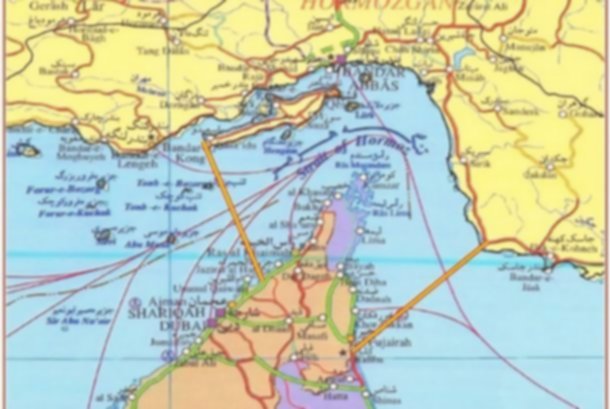
Shortly after the announcement of the operation, the Islamic Revolutionary Guard Corps (IRGC) released a new map on Monday claiming full control over the Strait of Hormuz. Under new regulations, vessels traversing the area are now subject to Iranian oversight.
According to reports covered by The Telegraph, the newly defined Strait of Hormuz extends from the western tip of Iran’s Qeshm Island to Umm al-Quwain in the United Arab Emirates. To the east, the boundary runs from Mount Mobarak in Iran to the Emirate of Fujairah in the UAE.
Tehran also introduced a new transit mechanism for vessels. On Tuesday, May 5, 2026, Iran’s state-owned Press TV reported that ships entering the strait must receive instructions via email from the Persian Gulf Strait Authority (PGSA). Vessels are required to comply with these specific transit regulations before being granted permission to proceed. This move reflects Tehran’s tightening grip on the maritime corridor, which serves as a global artery for oil and liquefied natural gas (LNG) shipments. These increased controls are a retaliatory measure following a joint U.S.-Israeli operation against Iran on February 28.
 The new map of the Strait of Hormuz released by the IRGC on Monday, May 4, 2026. – (X Screenshot)
On the international front, German Chancellor Friedrich Merz affirmed Berlin’s readiness to participate in ensuring safe navigation in the region, including through military support. German broadcaster NDR reported on Monday that the German Navy minesweeper FGS Fulda had departed from its base in Kiel, heading toward the Mediterranean, where it could be redeployed to the Strait of Hormuz for maritime security duties.
“Under the right conditions, Germany is prepared to take part in ensuring the freedom of sea lanes, including through military means,” Merz stated following a meeting with Portuguese Prime Minister Luis Montenegro in Berlin on Tuesday. He further emphasized the need for increased sanctions against Iran, asserting that the nation must stop holding the region and the world hostage.
Conversely, Spain has rejected any involvement in military operations within the strait. Foreign Minister Jose Manuel Albares warned that such actions could trigger further escalation, stating, “We reject participation in military operations and any action that could lead to an escalation. This must be avoided at all costs at this moment, as the risk of war remains.”
Albares underscored that there is no military solution to the current crisis and highlighted that Madrid supports ongoing diplomatic mediation, particularly by Pakistan. He noted that although the current situation is unsustainable due to the dual blockade by the U.S. and Iran, the most recent information regarding diplomatic contacts in Oman has been encouraging, reinforcing the belief that negotiations remain the only path to a resolution.
Summary
On May 3, 2026, the United States launched Project Freedom, a military operation designed to secure freedom of navigation in the Strait of Hormuz following reports of Iranian interference. The initiative involved significant naval and air assets, including guided-missile destroyers and thousands of personnel. In response, Iran asserted increased control over the waterway by implementing new transit regulations and demanding that vessels receive authorization from the Persian Gulf Strait Authority.
On May 6, 2026, President Donald Trump announced a temporary pause of Project Freedom, citing progress in diplomatic negotiations and requests from international partners like Pakistan. While the U.S. continues to maintain a blockade, the halt aims to determine if a lasting peace agreement with Iran can be finalized. Meanwhile, international reactions remain divided, with Germany expressing willingness to support maritime security while Spain advocates exclusively for diplomatic mediation to avoid further regional escalation.