
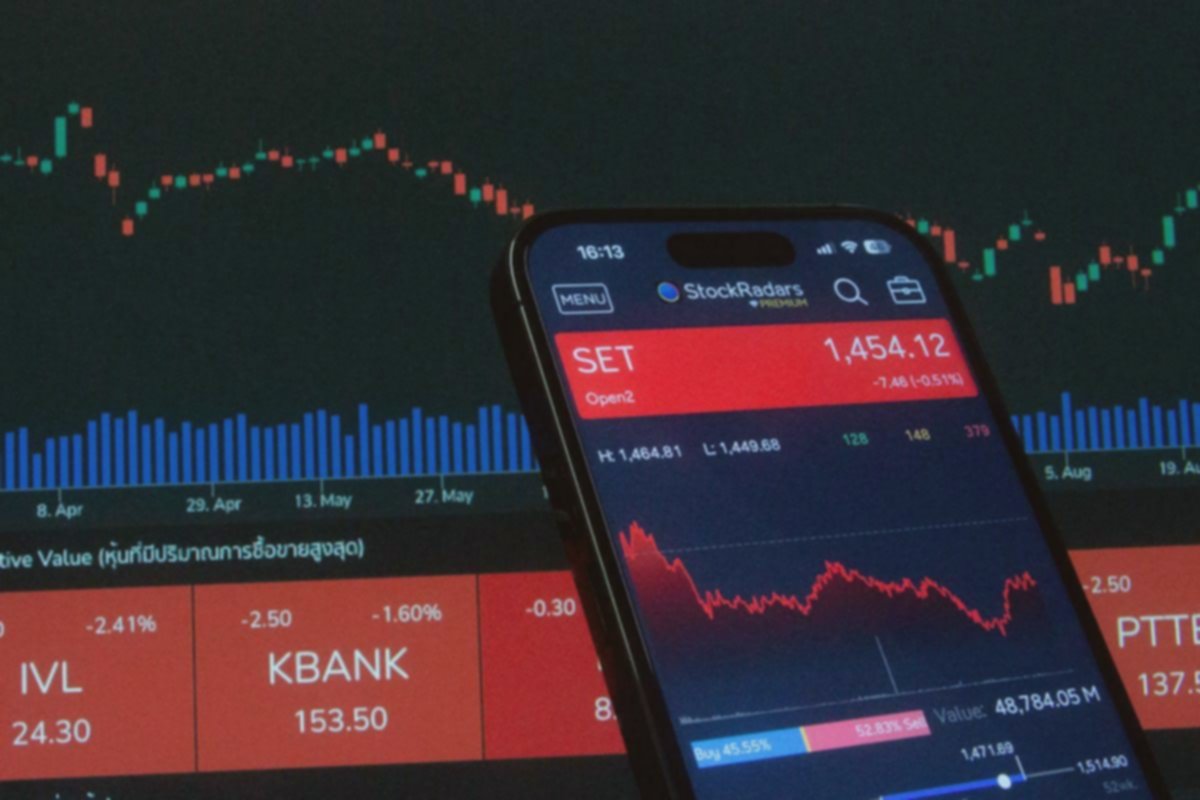
The Indonesian stock market is inextricably linked to the movement of the Indonesia Stock Exchange Composite Index (IHSG). When this benchmark index rises or falls, a multitude of individual stocks often follow suit, mirroring the broader market direction. For anyone looking to embark on their investment journey, a profound understanding of the IHSG’s influence on stock performance is absolutely crucial.
The IHSG frequently serves as the primary gauge for assessing the health and trajectory of Indonesia’s capital market. Indeed, many seasoned and novice investors alike closely monitor its fluctuations, using its performance as a significant factor in their decisions to buy or sell stocks. To demystify this critical relationship, let’s delve into a comprehensive explanation of how the IHSG impacts individual stocks.
1. IHSG as a market reflection 
The IHSG acts as a comprehensive mirror reflecting the overall state of Indonesia’s equity market. This vital index is composed of numerous stocks listed on the Indonesia Stock Exchange (IDX) and its movements are fundamentally driven by the collective trading activities of investors.
Consequently, when the IHSG rises, it generally signals that a majority of stocks across the market are experiencing price appreciation. Conversely, a decline in the IHSG often indicates widespread weakness, with numerous stocks depreciating. This direct correlation is precisely why investors routinely consult the IHSG’s movements before formulating their investment strategies.
For instance, in periods of positive market sentiment fueled by improving economic conditions, the IHSG typically strengthens. This upward momentum often translates into gains for prominent stocks in key sectors such as banking, energy, and technology. Thus, the IHSG is frequently referred to as the “mood ring” of the Indonesian stock market, providing an instant snapshot of investor confidence and market health.
2. Indicator of economic sentiment 
The IHSG’s influence on individual stocks is also profoundly intertwined with prevailing economic sentiment. A myriad of economic factors can sway this critical index, ranging from domestic inflation rates, central bank interest rate policies, and the rupiah’s exchange rate, to broader global economic conditions. When the economic landscape appears stable and promising, investors typically gain confidence, spurring them to actively purchase stocks. This surge in demand consequently propels the IHSG upward.
Conversely, the emergence of economic concerns, such as rising interest rates or heightened global uncertainty, tends to induce caution among investors. In such scenarios, many opt to sell off their holdings, leading to a decline in the IHSG. The ripple effect of this can cause stock prices across various sectors to undergo significant corrections. This makes it imperative for investors to consistently monitor economic news and the IHSG’s movements, thereby gaining a clearer understanding of market direction before making any investment decisions.
3. Impact on market psychology (supply & demand) 
Within the equities world, market psychology wields immense power over stock prices. The trajectory of the IHSG frequently triggers strong emotional responses from investors, particularly during periods of dramatic ascent or sharp decline. When the IHSG experiences a significant surge, a wave of optimism sweeps through the market. Investors, driven by a fear of missing out on potential gains, eagerly scramble to buy stocks. This heightened demand inevitably pushes stock prices even higher.
Conversely, if the IHSG plummets, panic can quickly take hold. Many investors rush to liquidate their holdings in a frantic effort to mitigate further losses. This surge in selling pressure, or supply, drives stock prices down. Such phenomena are particularly common among novice investors, who are often more susceptible to being swayed by prevailing market sentiment. Therefore, it is paramount for investors to remain calm and avoid immediate panic merely because the IHSG experiences a short-term dip.
4. Opposite movements occur (divergence) 
While the IHSG undoubtedly exerts a profound influence on the broader stock market, it’s crucial to understand that not all individual stocks consistently move in lockstep with the index. A phenomenon known as divergence can occur, where a particular stock might rally even as the IHSG declines, or vice versa. This often arises due to specific positive sentiment surrounding that company. Such catalysts might include strong financial reports, significant dividend payouts, strategic business expansions, or other favorable news.
For example, even if the IHSG is weakening due to broader global sentiment, the stock of a specific company might still climb because its business performance is exceptionally robust. Therefore, investors should not solely fixate on the IHSG; it is equally vital to conduct thorough fundamental analysis of the chosen stocks. This explains why certain stocks are often lauded as being “stronger than the market.” Even when the IHSG signals a downturn, these resilient stocks can still attract investor interest due to their promising prospects.
The influence of the IHSG on individual stock performance is indeed immense, as this index serves as the primary barometer for the overall condition of Indonesia’s capital market. From overarching economic sentiment and the collective psychology of investors to the directional movement of stock prices, all are frequently swayed by the IHSG’s ebbs and flows.
Nevertheless, it is equally important to grasp that not every stock will consistently mirror the index’s trajectory. Distinct company fundamentals and specific market sentiments can lead individual stocks to perform divergently from the broader market. By comprehending the intricate relationship between the IHSG and individual stocks, investors can make more informed and strategic decisions for their long-term investment goals.
IHSG Fails to Land in Green Zone: List of Stocks That Still Strengthened
Stock Market Unaffected by Prabowo’s Speech, IHSG Declines
IHSG Under Pressure, Dasco Asks Monetary Authority to Make Global Investors Stay
Summary
The Indonesia Stock Exchange Composite Index (IHSG) serves as the primary benchmark for assessing the health and trajectory of the Indonesian capital market. It reflects overall market sentiment, typically rising when economic conditions are stable and falling during periods of uncertainty or high interest rates. Most individual stocks follow the IHSG’s movement as it significantly influences investor psychology and collective trading activities.
Despite its broad influence, some stocks may experience divergence by moving independently of the index due to strong company-specific fundamentals or positive news. Factors like robust financial reports or strategic expansions allow certain stocks to remain resilient even when the overall index declines. Therefore, investors are encouraged to combine IHSG monitoring with thorough fundamental analysis to make informed investment decisions.