
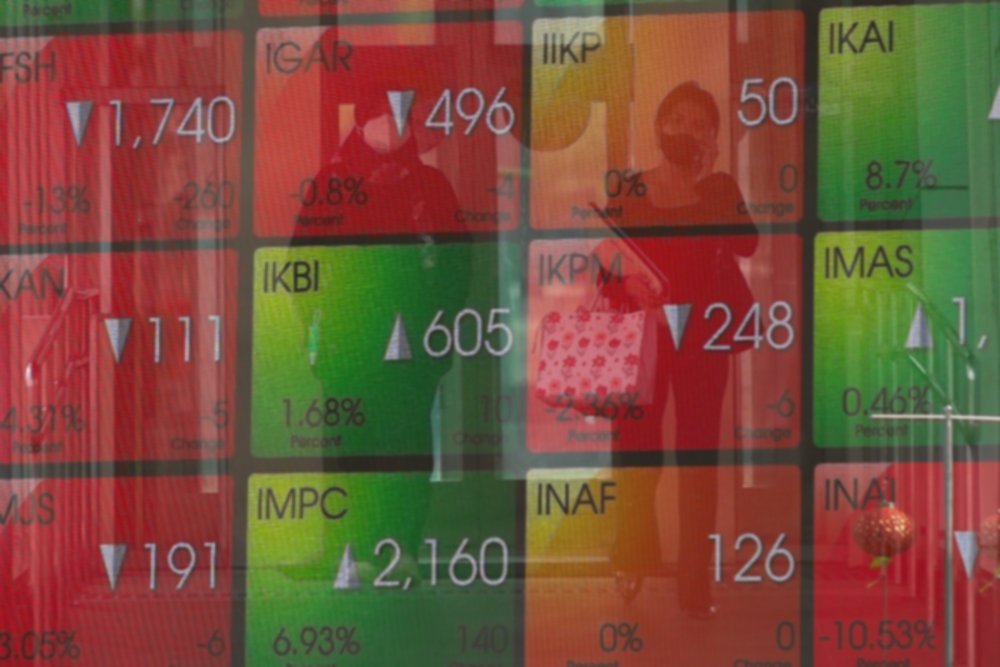

Flooring Guide by Cinvex — JAKARTA — The Indonesia Stock Exchange (IDX) has officially announced a reshuffle of its primary stock indices, including the LQ45, IDX30, and IDX80. These changes, which incorporate the newly implemented High Shareholding Concentration (HSC) criteria, will be effective from May 4, 2026, to July 31, 2026.
The latest rebalancing sees notable shifts, particularly with Prajogo Pangestu-affiliated firms. PT Petrindo Jaya Kreasi Tbk. (CUAN) has secured a spot in the prestigious LQ45 index. Joining the index alongside CUAN are other prominent names including PT Darma Henwa Tbk. (DEWA), PT Surya Essa Perkasa Tbk. (ESSA), PT Hartadinata Abadi Tbk. (HRTA), and PT Solusi Sinergi Digital Tbk. (WIFI).
Conversely, some stocks have been removed from the LQ45 following the latest evaluation. Most notably, PT Barito Renewables Energy Tbk. (BREN)—also affiliated with Prajogo Pangestu—was dropped after a three-month tenure. Other companies exiting the LQ45 include PT Ciputra Development Tbk. (CTRA), PT Dian Swastatika Sentosa Tbk. (DSSA), PT Medikaloka Hermina Tbk. (HEAL), and PT Trimegah Bangun Persada Tbk. (NCKL).
In the IDX30 index, PT Alamtri Minerals Indonesia Tbk. (ADMR) has been added as a new constituent, replacing PT Indosat Tbk. (ISAT). Meanwhile, the IDX80 index sees a broader transformation: BKSL, CBDK, DEWA, GGRM, and TPIA have been added, while BREN, BTPS, DSSA, MTEL, and NCKL have been removed.
LQ45 Rebalancing Summary (Effective May 2026):
Inclusions: CUAN, DEWA, ESSA, HRTA, WIFI
Exclusions: BREN, CTRA, DSSA, HEAL, NCKL
Full List of LQ45 Constituents:
AADI, ADMR, ADRO, AKRA, AMMN, AMRT, ANTM, ASII, BBCA, BBNI, BBRI, BBTN, BMRI, BRPT, BUMI, CPIN, CUAN, DEWA, EMTK, ESSA, EXCL, GOTO, HRTA, ICBP, INCO, INDF, INKP, ISAT, ITMG, JPFA, KLBF, MAPI, MBMA, MDKA, MEDC, PGAS, PGEO, PTBA, SCMA, SMGR, TLKM, TOWR, UNTR, UNVR, WIFI
IDX30 Rebalancing Summary:
Inclusions: ADMR
Exclusions: ISAT
Full List of IDX30 Constituents:
AADI, ADRO, ADMR, AMRT, ANTM, ASII, BBCA, BBNI, BBRI, BMRI, BRPT, BUMI, CPIN, EMTK, GOTO, ICBP, INCO, INDF, INKP, JPFA, KLBF, MBMA, MDKA, MEDC, PGAS, PGEO, PTBA, TLKM, UNTR, UNVR
IDX80 Rebalancing Summary:
Inclusions: BKSL, CBDK, DEWA, GGRM, TPIA
Exclusions: BREN, BTPS, DSSA, NCKL, MTEL
Index Criteria and Market Impact
The IDX’s decision to integrate the High Shareholding Concentration (HSC) aspect into its evaluation criteria is widely seen as a strategic move to bolster the quality of the Indonesian capital market. Genandy Miharja, Senior Equity Research Analyst at Simpan Asset Management, noted that these changes would enhance the quality of benchmark indices by prioritizing liquid stocks with strong fundamentals.
In the medium term, this policy is expected to encourage listed companies to improve their free float ratios to remain eligible for index inclusion. Maintaining a presence in these indices is crucial, as it attracts passive inflows and significantly boosts investor confidence. “This adjustment is beneficial for issuers because it attracts passive inflows and strengthens investor trust,” Miharja stated on Wednesday (April 22, 2026).
Miharja also highlighted the positive synchronization between the IDX and MSCI policies, including higher share ownership limits and the push for a minimum 15% free float. While acknowledging challenges such as governance strengthening and demutualization, he remains optimistic. “As an Investment Manager, we view this as a short-term pain for a long-term gain. Enhancing market credibility is exactly what the industry needs,” he concluded.
Summary
The Indonesia Stock Exchange (IDX) has announced a significant reshuffle of its LQ45, IDX30, and IDX80 indices, effective from May 4 to July 31, 2026. This rebalancing incorporates new High Shareholding Concentration (HSC) criteria, resulting in notable additions such as CUAN, DEWA, and ADMR, while key stocks like BREN, DSSA, and NCKL have been removed. These changes reflect a strategic effort to prioritize liquid stocks with robust fundamentals and improved market quality.
Analysts suggest that this policy will encourage listed companies to enhance their free float ratios to remain eligible for index inclusion, ultimately fostering greater investor confidence. While the transition may pose short-term challenges, the move is viewed as a necessary step toward aligning with global standards and increasing long-term market credibility. By attracting passive inflows, these index adjustments aim to strengthen the overall stability and transparency of the Indonesian capital market.